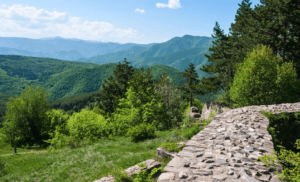
The Ceplina fortress combines history, a short climb, and views of the Rhodopes. The ruins above Dorkovo are a good idea for a walk during a vacation in Velingrad, especially if you want to spend part of the day outside. The visit is most enjoyable when you allow time to explore the ruins at your own pace and to linger at the top for the panorama.
Where is the Ceptina fortress located and how to get there?
Cepiña is located on a hill northwest of the village of Dorkovo, in the municipality of Rakitovo. From Velingrad, plan your trip through the Rakitovo area to Dorkovo; from the village, follow the signs for the fortress. In the navigation, search for „Cepiña Fortress, Dorkovo“ and check the final point to avoid confusing it with the eponymous railway station.
According to the description of The Ministry of Tourism From Dorkovo to the fortress there is an asphalt road. The car approach is to the area of the „Cipina“ hut, and the last climb to the ruins is on foot. Park in a designated place without blocking access. If you start on foot from the village itself, allow significantly more time: the published guide for this approach is about an hour and a half in one direction.
What is Ceplina known for?
The history of Ceplina is connected with despot Alexius Slav, a nephew of King Kaloyan. In the 13th century, the fortress was his seat and an important center in the Rhodopes. This connection with the Bulgarian Middle Ages is a good starting point for the visit: behind the stone ruins stands a fortified settlement with administrative, religious, and everyday life.
Tourist Information Center — Velingrad It describes the excavated remains of three churches and four water reservoirs called cisterns. They show different aspects of life in the fortress. The churches tell of the spiritual center of the settlement, and the water facilities help to imagine how the people secured their supplies on the high hill.
What to see during the visit?
Start with the fortress walls and the outlines of the buildings. Observe how the fortification follows the topography and look for the information panels that provide context for the individual remains. Cephinia is visited as an archaeological open-air site: the most interesting details are often found in the layout of the foundations, the thickness of the walls, and the relationship between the different parts.
Take time to enjoy the views from the hill as well. Choose a safe place for photos, stay on the marked paths, and do not climb on the old walls. For a better sense of scale, take a close look at the ruins first, then at the surrounding landscape — this way the fortress’s layout becomes more understandable.
If you enjoy history, consider a prearranged tour. The guide can help you distinguish the individual remains and connect what you see with specific events. Ask in advance if there is an accessible exhibit at the foot of the site on the day of your visit; plan this part according to the confirmed conditions.
Hiking with children: how to prepare the walk?
For a family visit, bring water, a light snack, and a top layer of clothing. Choose shoes with a sturdy sole, and during the warmer months add a hat and sun protection. The final part of the route involves climbing, so leave time for breaks and adjust the pace to suit the youngest participant.
Turn the exploration into a short conversation: why was the fortress built high up, where did the water come from and what did the buildings look like? Keep the children close to you by the walls and do not allow them to climb the ruins. For a children's stroller or guests with limited mobility, please clarify the accessibility in advance — the natural terrain and the climb can make it difficult to move around.
When to visit Tsenipina and how much time to allocate?
For the actual ascent from the base, the exploration and return are reasonable to plan for around an hour to an hour and a half. This is a guide for a relaxed program, not a fixed duration of the route. Add in the time for travel, conversation, and possibly a visit to an exhibition separately.
Choose a day with good visibility and appropriate weather forecast. In hot weather, start earlier; in the case of rain, snow or ice formation, assess whether climbing is suitable for your group. On an open hill, it can be windy, even when the weather in Velingrad seems calm.
Before leaving, check the access mode, the current fees, and the chat options through the local tourist information center or the Rakitovo Municipality. Please specify separately the conditions for the archaeological site and for any possible museum exhibition. This way, you will know what you can actually include in your program for the specific day.
A walk to Tsepina and a rest in Velingrad
You can add a visit to the tour The Pliocene Park in Dorkovo, dedicated to the prehistoric world of the area. Check its opening hours and leave enough time for the second attraction. After a day of history and nature, return to the relaxed rhythm of your own SPA holiday in Velingrad. Thus, the weekend combines new impressions with time for relaxation.